If you’d like a structured framework for navigating moments like this in your own research, you can download the Genealogist’s Workflow Guide here:
Download the Free Genealogist’s Workflow Guide
After sending an outreach message to a newly discovered relative, many genealogists prepare themselves for silence.
Sometimes that silence lasts weeks. Occasionally it lasts months.
And then one day, a reply appears.
For researchers who have been waiting patiently, that moment can feel exciting and a little uncertain at the same time. What happens next often determines whether the exchange becomes a productive collaboration or a brief conversation that fades away.
Understanding how to move the conversation forward thoughtfully can make all the difference.
The First Reply Is Often Cautious
When relatives respond to an unexpected genealogy message, their first reply is frequently brief.
They may simply acknowledge the connection or confirm a few basic details:
- “Yes, I think we might be related.”
- “I’ve heard that name in our family.”
- “I’m not very familiar with that side of the family.”
This kind of cautious reply is normal. From the recipient’s perspective, the conversation is still new. They may be curious but unsure how involved they want to become.
At this stage, the most effective response is usually one that keeps the exchange simple and comfortable.
Resist the Urge to Send Everything at Once
When a reply finally arrives, many genealogists feel a strong temptation to share the full scope of their research immediately.
That can include:
- detailed family trees
- multiple documents
- DNA explanations
- long relationship summaries
While the enthusiasm is understandable, sending too much information too quickly can overwhelm someone who has just entered the conversation.
A more effective approach is to build the exchange gradually.
Start by acknowledging their reply, confirming the connection, and offering one or two pieces of context. Allow the conversation to develop naturally from there.
Look for Shared Curiosity
Productive genealogy conversations usually develop when both sides find a point of shared curiosity.
That might be:
- a common ancestor
- a family migration story
- a photograph or document
- or simply the discovery of relatives previously unknown to each other
When a topic like this emerges, the exchange often becomes easier and more engaging for both people.
Respect Different Levels of Interest
Not every relative who replies will want to dive deeply into family history research.
Some people enjoy confirming connections and sharing a few stories, but have little interest in the detailed work of genealogy itself.
Others may be enthusiastic collaborators who quickly begin exchanging documents, photographs, and memories.
Both responses are valid.
The key is to meet relatives where they are rather than expecting every conversation to develop into a full research partnership.
If you’d like a practical framework for managing these kinds of interactions, you can download the free reference guide here:
Get the Free Genealogist’s Workflow Guide
Small Exchanges Often Lead to Bigger Discoveries
Some of the most meaningful breakthroughs in genealogy come from small exchanges that gradually build trust.
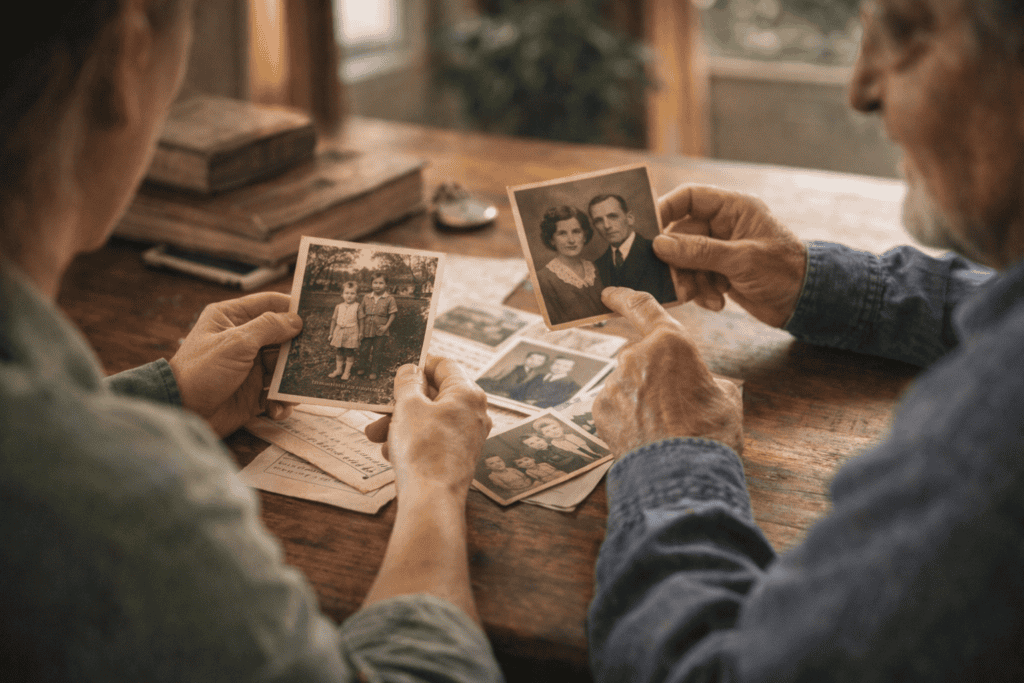
A single photograph shared in an early message can later lead to an entire branch of the family tree being clarified. A brief comment about a grandparent’s hometown can open new research paths.
These discoveries rarely happen in a single message.
They develop through conversation.
Where This Fits in the Genealogist’s Workflow
In the Genealogist’s Workflow, outreach does not end with the first message or the first reply.
It continues as a series of thoughtful exchanges that gradually transform research into collaboration.
Handled well, these conversations can become some of the most rewarding moments in family history work—bringing together documents, memories, and living connections in ways that records alone never could.
About the Author
Gary Katz is a professional genealogist and DNA detective specializing in Jewish and Eastern European family research, DNA analysis, and lineage reconstruction. He helps clients make sense of their ancestry and document their heritage.
If you’d like to follow along as I continue this work, I occasionally share notes and reflections in my
Genealogy Gary Roots Roundup
.
If you’re facing a complex research question and want help clarifying what the evidence actually supports, the best place to begin is with a focused assessment.