By Gary Katz
Professional Genealogist & Genetic Genealogy Researcher
This article continues the professional genealogy workflow I’ve been outlining throughout this series.
In The Genealogist’s Workflow, I introduced the overall framework I use to turn family mysteries into structured, evidence-based discoveries.
In Building the Tree Foundation, we focused on transforming family stories and inherited information into a coherent, working family tree.
From Family Stories to Verified History
.
Once family stories have been gathered and organized, the next critical step is verifying what can be proven.
Every family has its “chronicle” — a blend of truth, memory, and myth passed down through generations.
A grandmother’s recollection of “coming from Russia,” a story about “a great-uncle who changed his name at Ellis Island,” or the mysterious “missing branch” that no one talks about — these are the sparks that ignite genealogical discovery.
But as every professional genealogist learns quickly, stories are clues, not evidence. The second stage of my professional genealogy workflow — Verifying the Family Chronicle is about transforming family lore into fact. It’s where we replace speculation with documentation and turn oral tradition into a record-based history.
Why Verification Is Essential
Verification isn’t just about checking facts — it’s about building confidence in your research.
- Ensure that your tree reflects real people who can be documented.
- Catch and correct generational errors and mistaken identities.
- Build a research trail that others can reproduce and expand.
- Strengthen DNA analysis results by grounding matches in proven relationships.
Professional genealogy rests on what’s called the
Genealogical Proof Standard (GPS) method that emphasizes thorough research, accurate source citation, and logical conclusions supported by evidence. Good genealogy is transparent, traceable, and testable.
Step 1: Start with Known Facts, Not Assumptions
Before diving into new searches, collect and review all existing evidence, family documents, previous research, oral histories, and tree entries.
- Which facts are backed by documents?
- Which are based solely on memory or hearsay?
- Are there discrepancies between sources?
Mark unverified details clearly (for example, “said to be born in Poland, per family tradition”) until confirmed. This habit of labeling uncertainty is a hallmark of credible genealogy.
Step 2: Use Vital Records as Cornerstones
Vital records — birth, marriage, and death certificates are the bedrock of genealogical verification. They provide names, dates, places, and often parents’ identities.
Where to Find Them
- Ancestry.com and MyHeritage.com
- FamilySearch.org
- Reclaim the Records
- Municipal and state archives
Verification Tip:
When names vary across records, use a cluster of consistent details —
age range, spouse, occupation, residence to confirm identity. Focus on patterns, not perfection.
Step 3: Confirm through Government Documents
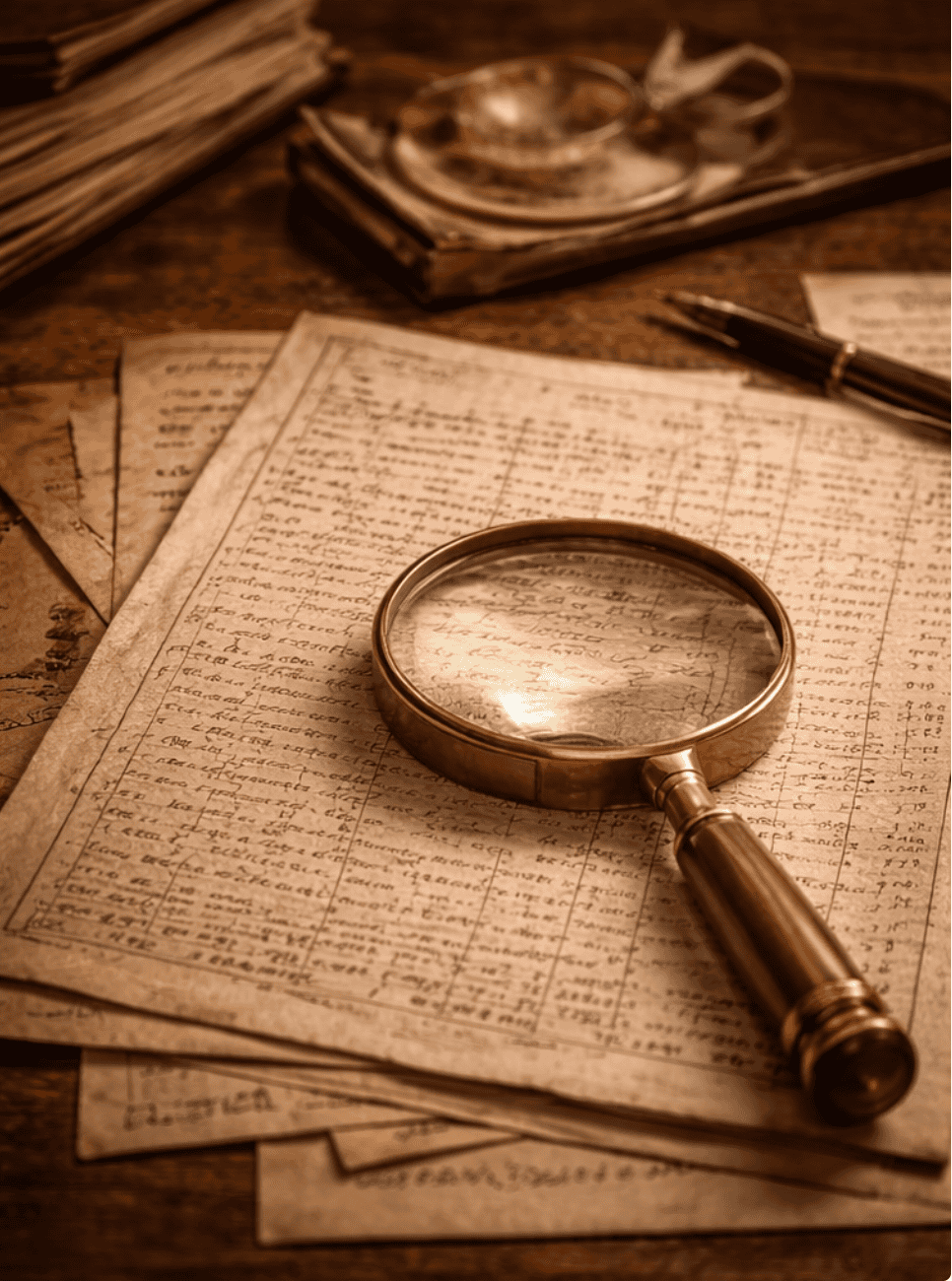
Vital records tell you who and when. Government documents often tell you where, how, and why.
Census records, military files, land deeds, immigration and naturalization papers,
probate records, and court documents frequently provide the connective tissue linking generations when vital records alone fall short.
Step 4: Leverage Published and Personal Sources
City directories, newspapers, books, family Bibles, letters, postcards, diaries, and yearbooks can all support or refine your findings.
Step 5: Verify through Religious and Burial Records
Church, synagogue, and cemetery records often predate civil registration and preserve otherwise lost information.
Step 6: Evaluate Evidence and Resolve Conflicts
When evidence conflicts, evaluate each source’s originality, informant reliability, and proximity to the event. Document unresolved conflicts transparently.
Step 7: Document, Cite, and Store
Always record where every fact came from. A tree without citations is speculation; a tree with them is history.
Verification Is the Genealogist’s Compass
Verification is not a single step — it’s a habit of mind. When you document a story with solid evidence, you transform family memory into family history.
Next in the Genealogy Workflow
About the Author
Gary Katz is a professional genealogist and DNA detective specializing in Jewish and Eastern European family research, DNA analysis, and lineage reconstruction. He helps clients make sense of their ancestry and document their heritage.
If you’d like to follow along as I continue this work, I occasionally share notes and reflections in my
Genealogy Gary Roots Roundup
.
If you’re facing a complex research question and want help clarifying what the evidence actually supports, the best place to begin is with a focused assessment.
6 Comments