By Gary Katz
Professional Genealogist & Genetic Genealogy Researcher
By the time a genealogist reaches this stage of research, much of the foundational work has already been done.
The overall framework has been established in
The Genealogist’s Workflow,
where I outlined how professional genealogy research moves from question to evidence-based conclusion.
Family stories and inherited information were organized into a coherent structure in
Building the Tree Foundation,
creating a working tree designed for analysis rather than assumption.
Those stories were tested against historical records in
Verifying the Family Chronicle,
where contradictions were resolved and unsupported claims set aside.
And the focus expanded beyond records alone in
Surfacing Living Cousins,
by identifying and engaging living relatives who may still carry pieces of the family story forward.
Yet even with a solid tree, verified documentation, DNA evidence, and collaborative connections, some ancestral questions remain stubbornly unresolved.
This is the point where many genealogists stall — uncertain how to move forward without compromising the integrity of their verified work.
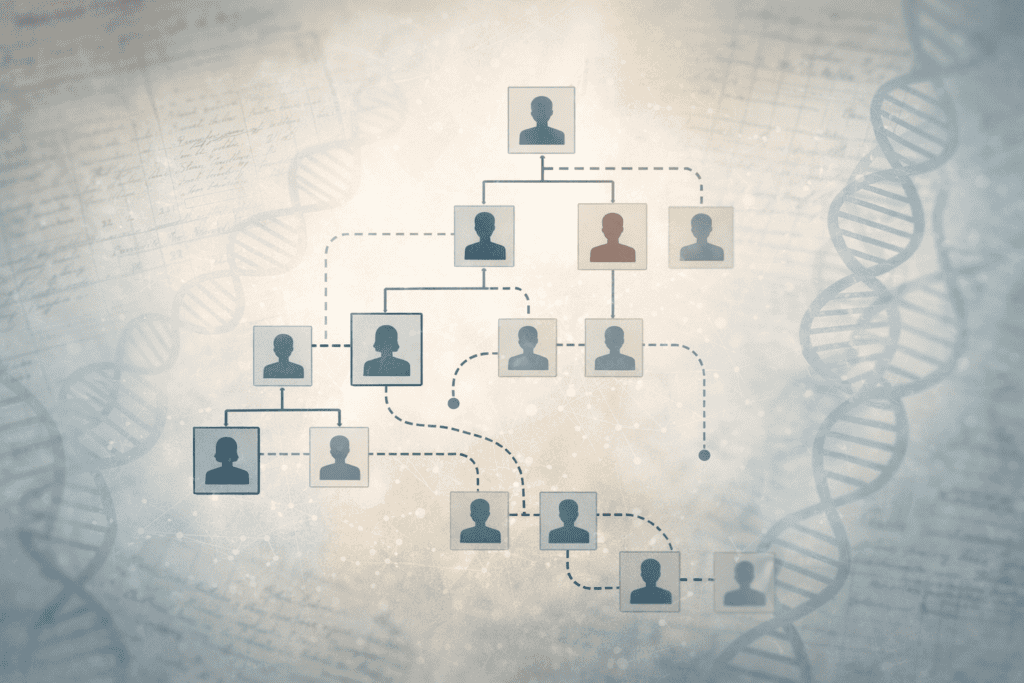
Experimenting with Big Puzzles explores what happens next. It introduces a disciplined way to test possibilities using hypothetical trees — provisional structures that allow genealogists to explore competing theories, evaluate DNA-driven clues, and eliminate false leads without contaminating proven research.
Used responsibly, experimental trees are not guesswork or shortcuts. They are a controlled environment for asking better questions — and for breaking through genealogical brick walls that records, DNA, and collaboration alone cannot yet solve.
The Art and Science of the Hypothesis Tree
Every genealogist eventually hits the wall: that immovable barrier where records vanish, surnames shift, or a common ancestor refuses to reveal themselves.
At this stage, traditional verification alone isn’t enough. You must think like a detective — testing multiple possible scenarios until one fits the evidence.
That’s where the Big Puzzle approach comes in: building experimental trees — carefully marked, provisional branches that allow you to test hypotheses, identify false trails, and ultimately solve genealogical mysteries.
An experimental tree isn’t guesswork — it’s structured imagination, clearly labeled and continuously tested against evidence.
Step 1: Know When to Build an Experimental Tree
An experimental tree is useful when:
- You’ve exhausted standard records and can’t confirm the next ancestor.
- DNA matches point to multiple potential relationships, but documentation is unclear.
- You’re dealing with common surnames or overlapping families in a small geographic area.
- You suspect a name change, adoption, or cultural shift in identity.
Rather than forcing unverified individuals into your main tree, build a separate experimental tree — a controlled space for testing relationships.
Step 2: Use DNA Clues as Your Compass
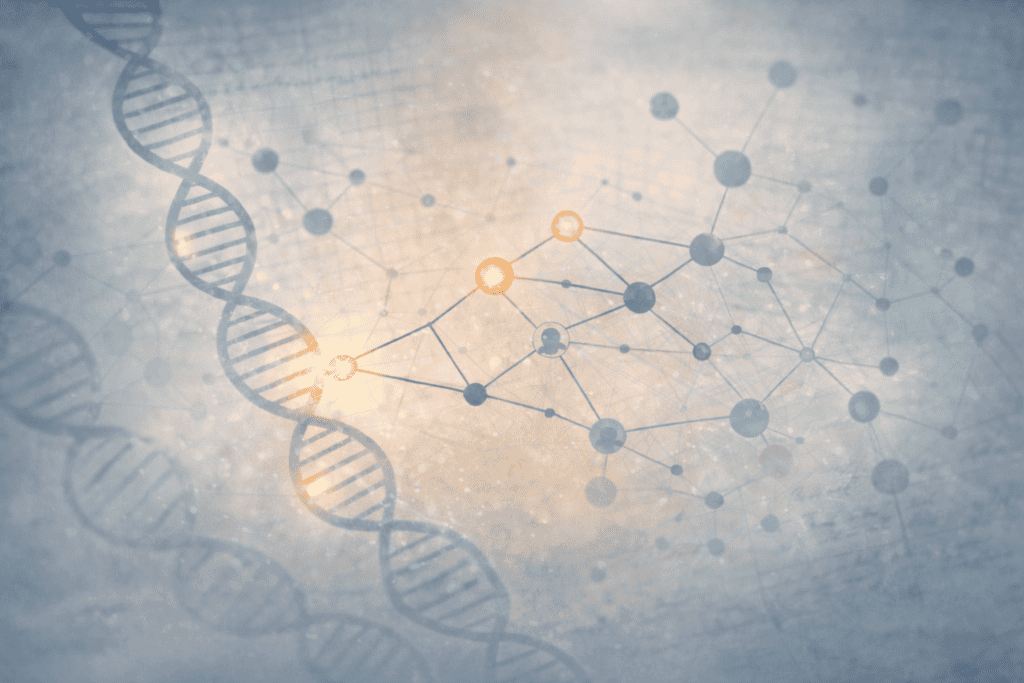
DNA is often what sparks a Big Puzzle investigation.
High shared matches with missing connections hint that your known tree is incomplete.
Action Plan
- Start with high DNA matches whose trees overlap geographically or by surname.
- Identify patterns across multiple matches.
- Create a hypothetical connection linking your ancestor to the suspected family.
- Test the hypothesis against additional matches and records.
DNA gives you the puzzle pieces — but the experimental tree is where those pieces can be tested safely without corrupting your verified lineage.
Step 3: Build Your Experimental Tree Transparently
Create experimental branches on a separate tree, clearly labeled as hypothetical or under research.
- Ancestry: Use tags such as “Hypothesis” or “Unverified.”
- MyHeritage: Apply color-coded labels or detailed notes.
- Desktop software: Maintain a separate experimental project.
Transparency distinguishes a scientific genealogist from a speculator.
Step 4: Use Genealogy Site Algorithms as Research Partners
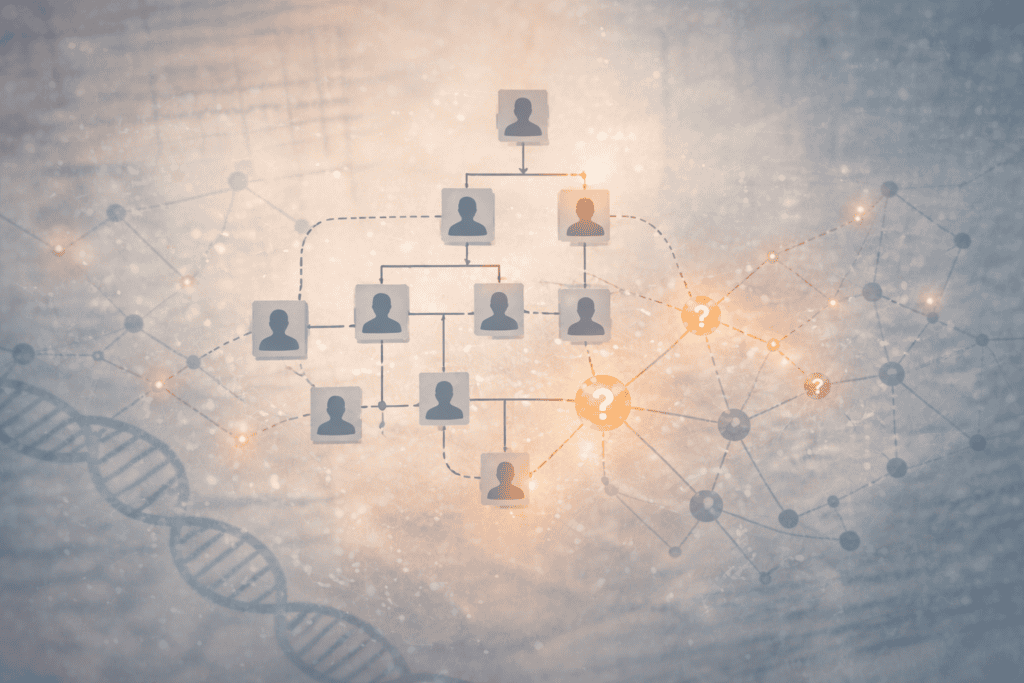
Modern genealogy platforms provide powerful tools for hypothesis generation — not proof.
Algorithms should suggest. Genealogists must decide.
Step 5: Apply the Genealogical Scientific Method
- Form a clear research question.
- Develop a testable hypothesis.
- Evaluate evidence objectively.
- Refine or discard the hypothesis.
Treat your tree like a laboratory, not a shrine — and document every experiment, not just the successes.
Step 6: Collaborate to Validate Hypotheses

Collaboration accelerates discovery and prevents tunnel vision.
Step 7: Document Failed Hypotheses Too
In professional genealogy, disproving a theory is as valuable as proving one.
Negative evidence, properly logged, is a map of where not to dig again.
Step 8: Know When to Merge Hypotheses into Proven History
Once multiple sources converge — records, DNA, and logic — hypotheses may be integrated into the verified tree with full annotation.
The Freedom to Imagine — Responsibly
The most creative genealogists are not reckless — they’re rigorously imaginative.
By balancing experimentation with discipline, genealogists transform roadblocks into discoveries.
Next in the Genealogy Workflow:
Article 6 — Deep Diving into DNA: How to Turn Genetic Data into Ancestral Discovery
About the Author
Gary Katz is a professional genealogist and DNA detective specializing in Jewish and Eastern European family research, DNA analysis, and lineage reconstruction. He helps clients make sense of their ancestry and document their heritage.
If you’d like to follow along as I continue this work, I occasionally share notes and reflections in my
Genealogy Gary Roots Roundup
.
If you’re facing a complex research question and want help clarifying what the evidence actually supports, the best place to begin is with a focused assessment.
4 Comments